
 By Gedi Ahmed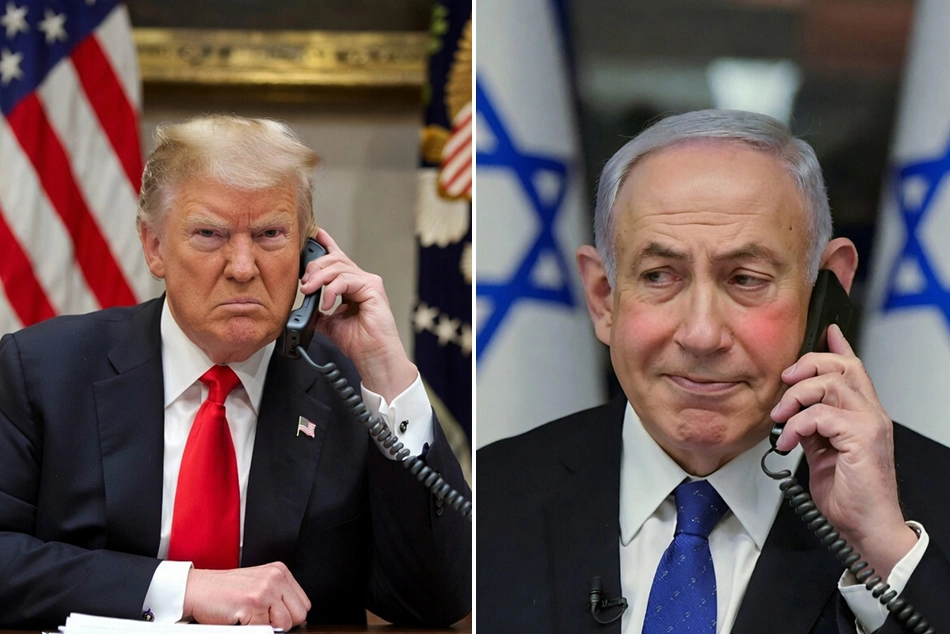
Trump Confronts Netanyahu Over the Lebanon War: A Growing Rift Between Allies
Muqdisho (Geedfadhinews) A dramatic political confrontation has reportedly emerged between U.S. President Donald Trump and Israeli Prime Minister Benjamin Netanyahu over Israel’s renewed military operations in Lebanon. According to reports, Trump expressed strong frustration with Netanyahu’s actions, using unusually harsh language during a private exchange and questioning the Israeli leader’s decision-making at a time of growing regional instability.
The reported disagreement highlights the increasing tensions between two leaders who have historically maintained a close political relationship. Trump, who has often presented himself as one of Israel’s strongest allies, appears to have reached a point where he believes Israel’s actions in Lebanon could have significant consequences for regional security, American interests, and international diplomacy.
Sources familiar with the matter claim that Trump openly criticized Netanyahu’s handling of the conflict, allegedly asking him, “What the hell are you doing? Are you completely crazy?” The remarks, if accurately reported, represent one of the sharpest criticisms Trump has directed toward the Israeli prime minister.
Background to the Lebanon Conflict
The latest tensions stem from renewed military activity along the Israel-Lebanon border. For years, the frontier has remained one of the Middle East’s most volatile flashpoints. Armed groups operating in southern Lebanon, particularly Hezbollah, have frequently clashed with Israeli forces, leading to cycles of violence that threaten to escalate into larger regional conflicts.
Recent military operations have reportedly intensified concerns among international observers. Several governments and organizations have warned that a wider conflict involving Lebanon, Israel, and potentially other regional actors could destabilize the entire Middle East. Diplomatic efforts aimed at reducing tensions have faced significant challenges as both sides accuse each other of provoking hostilities.
The United States has traditionally played a central role in mediating disputes involving Israel and its neighbors. American administrations, regardless of political affiliation, have often sought to balance support for Israel’s security with efforts to prevent wider regional wars. Trump’s reported intervention appears to reflect concerns that continued escalation may undermine these objectives.
Trump’s Frustration with Netanyahu
According to the reports, Trump’s frustration was not limited to the military operations themselves. He allegedly reminded Netanyahu of the political support he had provided throughout his presidency, suggesting that his backing had been instrumental in helping the Israeli leader navigate difficult political and legal challenges.
Observers note that Trump has frequently emphasized his administration’s pro-Israel record. During his previous term, he recognized Jerusalem as Israel’s capital, supported the Abraham Accords, and pursued policies widely welcomed by Netanyahu’s government. Because of this history, the reported confrontation has attracted considerable attention among political analysts.
Some experts argue that Trump’s remarks may indicate a broader concern about the potential consequences of prolonged military campaigns. Large-scale operations often carry diplomatic, economic, and humanitarian costs that can affect relations between allies. If Trump believes the conflict risks drawing additional countries into the crisis, his criticism may be motivated by strategic considerations rather than a fundamental shift in support for Israel.
Others suggest the disagreement reflects the increasingly complex nature of Middle Eastern politics. Even close allies can differ over military strategy, timing, and diplomatic priorities. While public disagreements between Washington and Jerusalem are not unprecedented, the alleged language used by Trump stands out for its intensity.
Regional Implications
The conflict in Lebanon has implications that extend far beyond the immediate battlefield. Regional powers continue to monitor developments closely, aware that any significant escalation could trigger broader security challenges. Neighboring countries remain concerned about refugee movements, economic disruptions, and the possibility of direct military involvement.
International markets also tend to react nervously to instability in the Middle East. Energy prices, trade routes, and investor confidence can all be affected when military tensions increase. As a result, governments around the world are paying close attention to the evolving situation.
Diplomats from Europe, the United States, and the United Nations have repeatedly called for restraint. Their primary objective is to prevent the conflict from spreading into a larger regional war. However, achieving that goal requires cooperation from all parties involved, including Israel, Lebanon, and influential regional actors.
Impact on U.S.-Israel Relations
Relations between the United States and Israel have historically been among the strongest bilateral partnerships in international politics. The two countries cooperate closely on defense, intelligence sharing, technology, and economic development. Despite occasional disagreements, both governments have generally maintained a strong strategic alliance.
Political analysts caution against interpreting the reported exchange as evidence of a complete breakdown in relations. Leaders often engage in private disputes while continuing to collaborate on broader strategic objectives. However, the incident does reveal that differences exist regarding the management of ongoing regional conflicts.
If tensions between Trump and Netanyahu continue, they could influence future policy discussions related to military aid, diplomatic initiatives, and regional security planning. Much will depend on whether the two leaders can reconcile their differences and establish a common approach to addressing the crisis.
Netanyahu’s Position
Netanyahu has consistently argued that Israel must take decisive action to protect its citizens from security threats. Israeli officials frequently emphasize the need to respond forcefully to attacks and prevent hostile groups from gaining military advantages.
Supporters of Netanyahu contend that Israel faces unique security challenges that require rapid and sometimes aggressive responses. They argue that military operations are often necessary to deter future attacks and maintain national security.
Critics, however, warn that military escalation can produce unintended consequences, including civilian casualties, international criticism, and long-term instability. These competing perspectives continue to shape debates both within Israel and among its allies.
International Reactions
Governments across the world have reacted with concern to reports of renewed fighting in Lebanon. European leaders have called for diplomatic engagement and restraint, while international humanitarian organizations have highlighted the risks facing civilians in affected areas.
The United Nations has reiterated its support for efforts aimed at reducing tensions and preventing further escalation. Humanitarian agencies have also emphasized the importance of ensuring access to aid and protecting non-combatants.
Meanwhile, political commentators are closely watching developments in Washington and Jerusalem. Any visible disagreement between Trump and Netanyahu is likely to influence international perceptions of the conflict and shape diplomatic calculations among regional actors.
What Happens Next?
The future trajectory of the conflict remains uncertain. Military developments on the ground, diplomatic negotiations, and political decisions in both Washington and Jerusalem will all play a role in determining the outcome.
If diplomatic efforts succeed, the current tensions could eventually give way to negotiations aimed at restoring stability. However, if hostilities continue or intensify, the risk of a broader regional confrontation may increase significantly.
For now, the reported confrontation between Donald Trump and Benjamin Netanyahu serves as a reminder that even the closest political alliances can face moments of strain. The situation underscores the complexity of Middle Eastern geopolitics and the challenges leaders face when balancing security concerns, diplomatic relationships, and international expectations.
Conclusion
The reported clash between President Donald Trump and Prime Minister Benjamin Netanyahu over the Lebanon conflict has captured international attention because it involves two leaders long associated with a strong political partnership. Trump’s alleged criticism reflects growing concerns about the potential consequences of escalating military operations and the broader impact on regional stability.
Whether this disagreement represents a temporary dispute or a more significant shift in relations remains to be seen. What is clear is that developments in Lebanon will continue to influence international diplomacy, regional security, and the future of U.S.-Israel cooperation. As the situation evolves, governments, analysts, and citizens around the world will be watching closely to see how both leaders respond to one of the Middle East’s most challenging and sensitive conflicts.
 Hassan A-bare
  Geedfadhinews